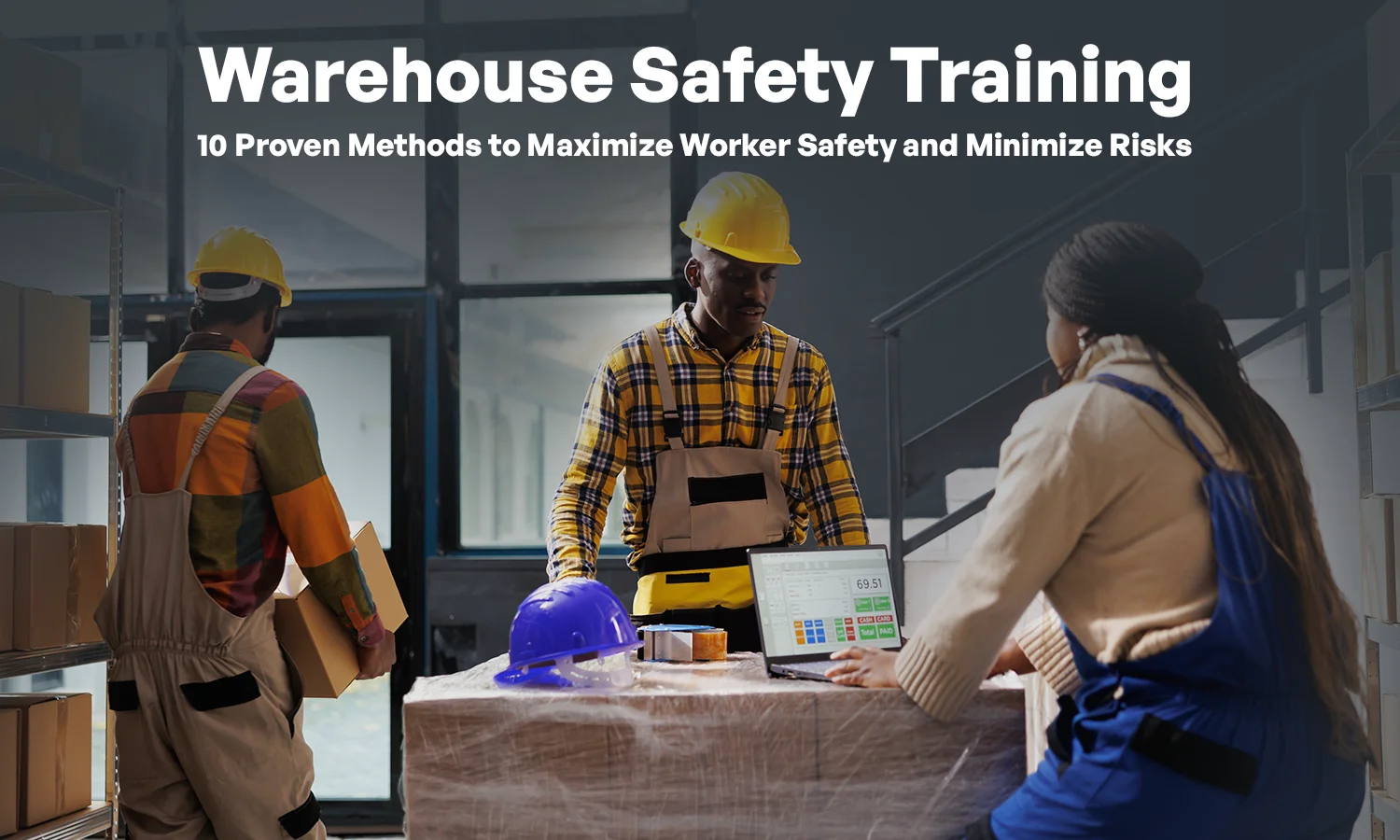
Warehouse safety training has moved from a compliance requirement to an operational necessity. Modern warehouses operate at high speed, high density and often without downtime. This intensity increases fatigue, amplifies small errors and raises the cost of failure. Industry reports consistently show that more than 25 percent of workplace incidents occur in warehouse environments, making safety lapses a direct threat to people, continuity and cost control.
Beyond injuries, incidents trigger investigations, insurance escalation and temporary shutdowns that disrupt inbound and outbound flow. In this environment, warehouse safety training is one of the most effective ways to protect workers while maintaining operational stability and workplace health and safety.
Why Is Warehouse Safety Training More Important Than Ever?
E-commerce growth has pushed warehouses into extended and continuous operations. Higher throughput increases physical strain and mental fatigue, while tighter turnaround times reduce tolerance for error. At the same time, workers share space with forklifts, conveyors and automated systems, making strong safety awareness essential on the floor.At the core, logistics services optimize business operations by reducing waste and avoiding inefficiencies. Effective logistics operations allow businesses to:
Technology alone does not prevent incidents. Training ensures teams understand how to operate safely within complex environments and respond correctly when conditions change. For many facilities, especially small and mid-sized ones,
warehouse safety training remains the most accessible way to strengthen occupational health and safety without major capital investment.
10 Safety Training methods in the Warehouse
1. Workplace Risk-Based Safety Training
This method focuses on understanding warehouse hazards and role-based risks. It establishes safe systems of work and clear behavioural expectations. Training is tailored to specific job functions to ensure every worker understands the unique dangers of their environment.
2. Emergency Response Training (Fire & Accident)
Workers learn alarm response, evacuation procedures and the location of assembly points. This training also covers spill control and incident escalation protocols. Proper drills ensure that staff can exit the building quickly and safely during a crisis.
3. First Aid & Firefighting Training
This training supports legal compliance and an immediate life-saving response. It helps reduce injury severity and lower insurance or medical costs. A trained firefighter can also inspect and maintain fighting equipment. This ensures first aid at work readiness is always high.
4. Forklift & Material Handling Equipment (MHE) Operator Safety Training
This includes certification, load stability, pedestrian segregation and traffic rules. Operators must perform pre-use inspections every shift. Under the guidance of a certified safety professional, these sessions focus on preventing vehicle-related injuries.
5. Manual Handling & Ergonomic Safety Training
Staff are taught safe lifting techniques, load assessment and the use of mechanical aids. The goal is the prevention of musculoskeletal injuries. These sessions show workers how to handle loads without putting unnecessary strain on their bodies.
6. Pedestrian & Vehicle Interaction Safety Training
Training reinforces the use of marked walkways, crossings and blind-spot control. It covers one-way systems and speed management to prevent collisions. Physical and behavioural separation is key to maintaining workplace health and safety in busy aisles.
7. Housekeeping Training
Safe layouts, waste removal and floor marking are central to this method. Workers learn that inspection happens through cleaning to ensure sustained order. Tools like 5S play an important role in keeping the floor free of hazards.
8. Safe Stacking, Storage & Racking Safety Training
This training covers load limits, pallet condition and rack damage identification. Workers learn how to spot structural issues and take corrective action before a collapse occurs. Maintaining a health and safety management system requires constant vigilance of storage structures.
9. Lockout / Tagout & Maintenance Safety Training
This method covers energy isolation, personal locks and zero-energy verification. It also includes contractor control to ensure third-party workers follow the same rules. No machine is touched for repair until it is completely powered down and locked.
10. Incident reporting (Near-Miss,Accident Reporting) Training
Training promotes proactive reporting of near-misses, unsafe conditions, and incidents to identify trends and underlying risks. Encouraging timely, blame-free reporting enables corrective actions to be implemented before injuries or damage occur. This approach strengthens prevention, continuous improvement, and the effectiveness of the safety management system
How Does Continuous Safety Training Build a Positive Safety Culture?
Continuous warehouse safety training keeps safety visible and relevant. Short refreshers counter knowledge loss and reinforce correct behaviour. Regular safety toolbox talks help teams focus on risks linked to daily workloads and changing conditions.
Over time, this approach builds confidence, encourages reporting and strengthens safety leadership across all levels. Safety becomes part of how work is done, not an external rule imposed from above.